British Druid Rune and Ogham Stone Translations
ᚐ ᚑ ᚒ ᚓ ᚔ ᚁ ᚂ ᚃ ᚄ ᚅ ᚋ ᚌ ᚍ ᚎ ᚏ ᚆ ᚇ ᚈ ᚉ ᚊ
A ' U/W E Y/I R P Ṣ Š N M Ṭ Z B G Ḫ D T K S
X = (letter divider) > = (end of sentence)
New Ogham Letter Assignments Based On Druid Akkadian Runes
(March 10, 2026, updated April 5) Ogham most likely developed as hand signals for the purposes of trading between the northern, non-Roman, cultures. Three Druid Akkadian writing cultures existed in the north using different letter styles: Nordic, Welsh/Cornish, and Irish/Anglo-Saxon. By this time they also were speaking differently due to Indo-European influences so hand signals became their only means of communication. The number representations from this hand signaling survived in the trading pits of Dutch New York up through today. Significantly, these hand signals could be scratched on wood and stone with lines representing the fingers and the orientation of the lines representing the hand orientations.
Ogham hand signals start with the palm facing out. The vowel signs use a hand orientation having the fingers facing left (the vowels). Hand orientation facing right provides M through G, facing down provides R through N, and facing up provides H through S.
Palms facing in represent numbers as preserved in the hand signals from the New York trading pits.
Ogham is also found in Scandinavia. It is not just a Celtic phenomena.


The 3 Northern Letter Style Traditions
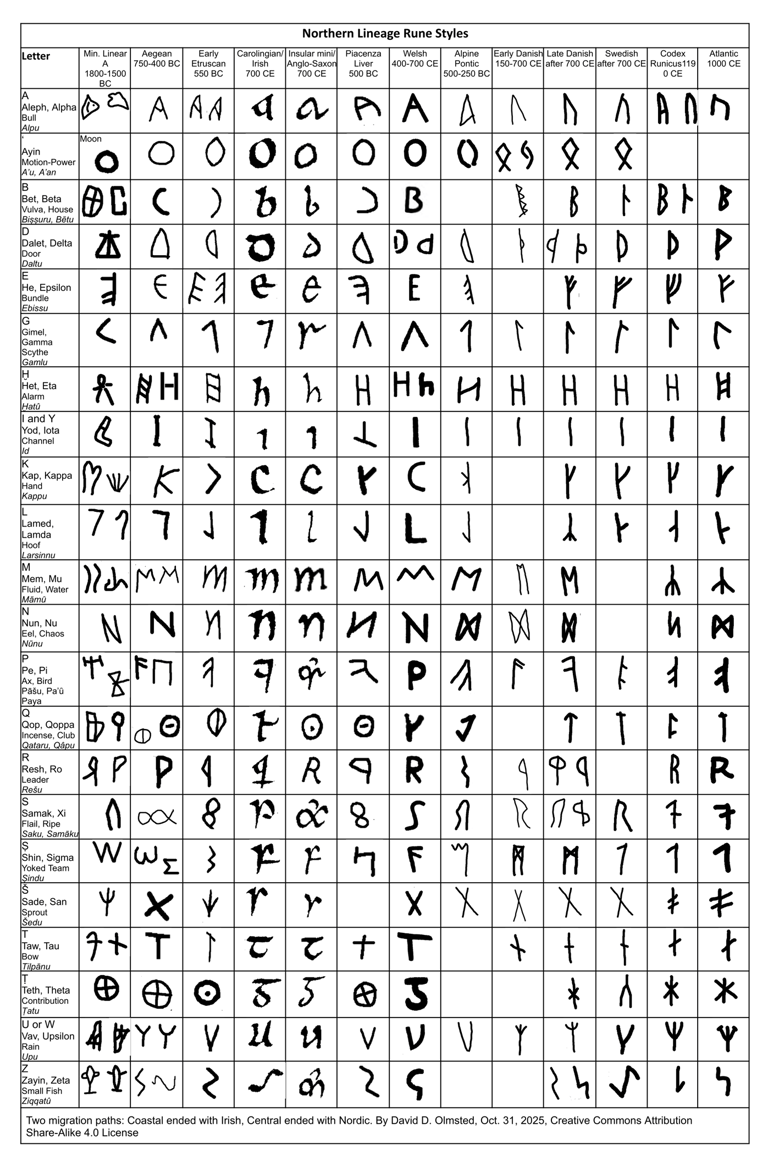
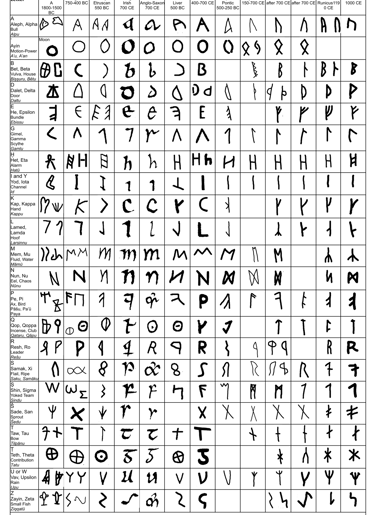
(April 16, 2026) Three letter style tradition exist in northern Europe. The Etruscan tradition moved north through Europe over the Alps (Alpine Pontic) and split into Scandinavian (Danish, Swedish) and Celtic (Wales, Ireland, Cornwall) styles. The copper mining Cypriot tradition moved up the Danube/Rhine trade route and is found alongside the Celtic style in Wales, Ireland, and Cornwall. This Cypriot lineage has been most confusing to scholars because it seemingly appears out of nowhere. Consequently, it has been called many things from Anglo-Saxon, to half uncial, to Carolingian.
Celtic Stones Not Listed in Macalister Or Without Text
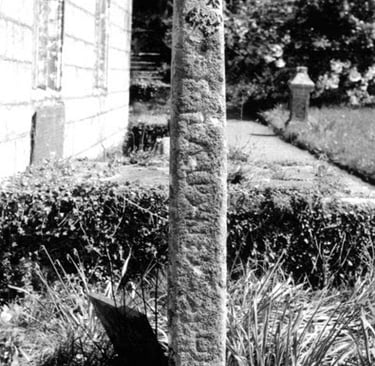
Lanteglos Runestone
(February 22, 2026) This stone is now located in the churchyard of St Juliot's church east of south porch in Lanteglos by Camelford, Cornwall.
It was first recorded 1858 as propping up a barn wall at Lanteglos (Blight 1858, 126). In 1870 it was recorded as being in farm yard on Castle Gough estate (Polsue 1870, 57), this being 200 meters north-west of the church site. It was recorded in 1875 as being in the local rectory garden of Lanteglos (Rhys 1875, 363); It was moved to its present location in 1900 (Langdon, Arthur 1906, 416)
https://chacklepie.com/ascorpus/catvol11.php?pageNum_urls=25&totalRows_urls=94

Thor's Cross
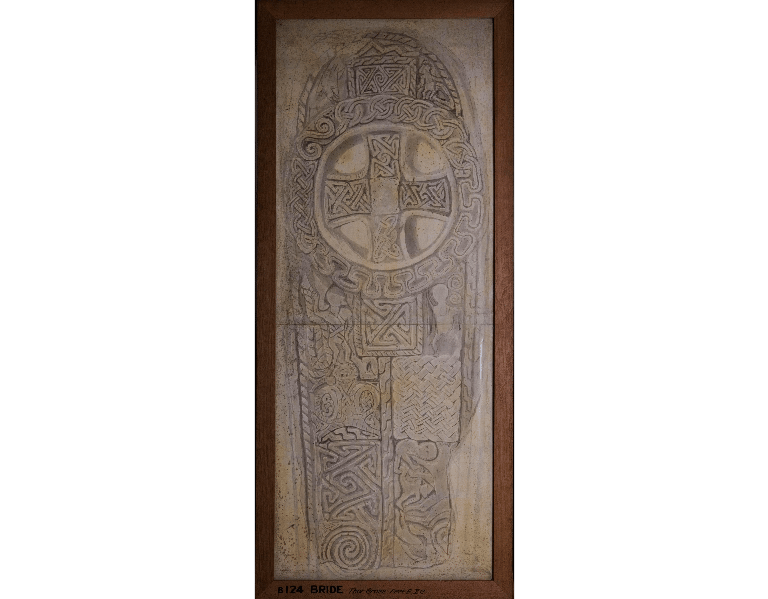
Not all stones on the Isle of Man had text. This stone (called Thor's cross) is shows the Celtic/Druid equilateral cross representing astrology magic. Notice the Druid spiral in the lower left corner. This stone also has several images showing humans. It probably is a mix of Celtic and Viking influences which dates it to about 800 CE.
From iMuseum Date made: ?1906, Artist: Kermode, Philip Moore Callow, Measurements: overall: 153 cm x 63 cm;artwork: 144 cm x 54 cm. ID number: 2006-0295/124Bi
Online at: https://www.imuseum.im/ This is the online service of Manx National Heritage at: https://manxnationalheritage.im/collections/library-and-archives/
© 2022-2026. By David D. Olmsted. All pages licensed under a Creative Commons Attribution-NonCommercial-ShareAlike 4.0 International Copyright. https://creativecommons.org/licenses/by-nc-sa/4.0/