Indo-European Invasion

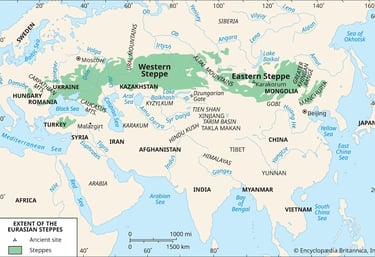
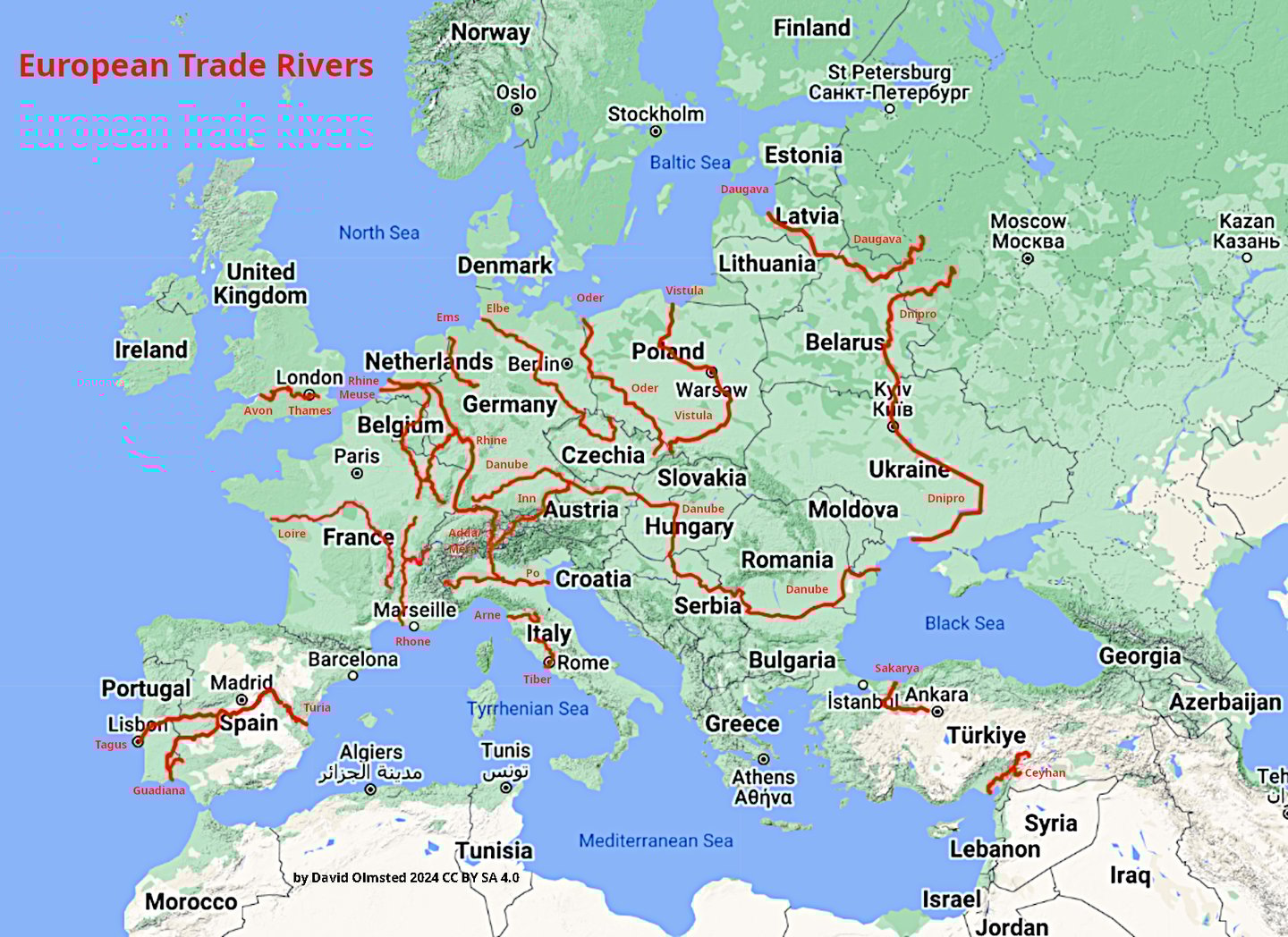
(September 2, 2024) This is the original extent of the Eurasian steppe which was home to the Indo-European culture. Notice that the steppe culture and Druid Akkadian forest culture would have naturally met along the Danube river trade route.
Image from Encyclopedia Britannica at: https://www.britannica.com/place/the-Steppe
(January 24, 2026) Europe originally referred to the lands connected by the Danube/Rhine trade route through to the Anatolian coastal trade route up to the Ceyhan river. River trade routes were the reference points for ancient geography, not land masses like today which where not well mapped back then.
The word Europe is the Druid Akkadian phrase EW.R'.P meaning "Those who attend to the shepherd-priest's nourishments." Shepherd-priest's use astrology-magic used to shift fate.
The word Asia is the Druid Akkadian phrase or A.SY meaning "Those who block" because Asia blocks riverine trade routes to India.
The word Libyu or Libya is the Druid Akkadian phrase LY.B.Y meaning "Those whom fate does not nourish" which can apply to those who live in the desert or any group barely surviving. Notice that such place names may either explicitly include the word "those (letter A) or just imply it.
In Homer's Odyssey the translation of "libya" and "libu" has been problematic because it refers to a fertile island and not a desert coast like today's definition. In a quality edition by A.T. Murry (1919) they are translated as "lotus eaters" ("lotus nourishing") and "lotus." While the location of the Cyclops is a bit vague in Homer, the poet Euripides (c. 480–406 BC) locates it on the island of Sicily near Mount Etna: The following is Murry's translation of Homer:
Book 9 - [90] two men I chose, sending with them a third as a herald. So they went straightway and mingled with the Lotus-eaters, and the Lotus-eaters did not plan death for my comrades, but gave them of the lotus to taste. And whosoever of them ate of the honey-sweet fruit of the lotus, [95] had no longer any wish to bring back word or to return, but there they were fain to abide among the Lotus-eaters, feeding on the lotus, and forgetful of their homeward way. These men, therefore, I brought back perforce to the ships, weeping, and dragged them beneath the benches and bound them fast in the hollow ships; [100] and I bade the rest of my trusty comrades to embark with speed on the swift ships, lest perchance anyone should eat of the lotus and forget his homeward way. So they went on board straightway and sat down upon the benches, and sitting well in order smote the grey sea with their oars. [105]
Book 23 - [310] He began by telling how at the first he overcame the Cicones, and then came to the rich land of the Lotus-eaters, and all that the Cyclops wrought, and how he made him pay the price for his mighty comrades, whom the Cyclops had eaten, and had shown no pity. Then how he came to Aeolus, who received him with a ready heart, [315] (http://data.perseus.org/citations/urn:cts:greekLit:tlg0012.tlg002.perseus-eng1:23.310-23.343)
Map made by David Olmsted.
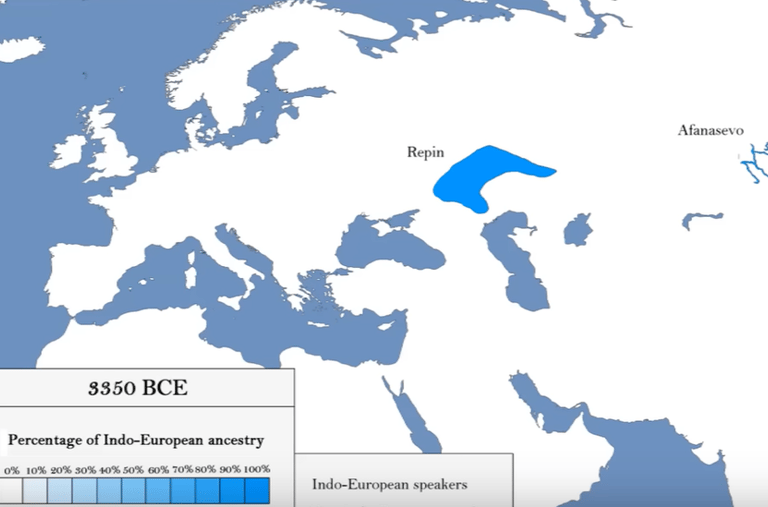
(October 31, 2023) This is the Indo-European homeland along the Ural river. This material tradition existed for about 400 years before it started to expand around 3350 BCE.
From an excellent animation of existing data: https://www.youtube.com/watch?v=fNv3R1xS6so&t=46s
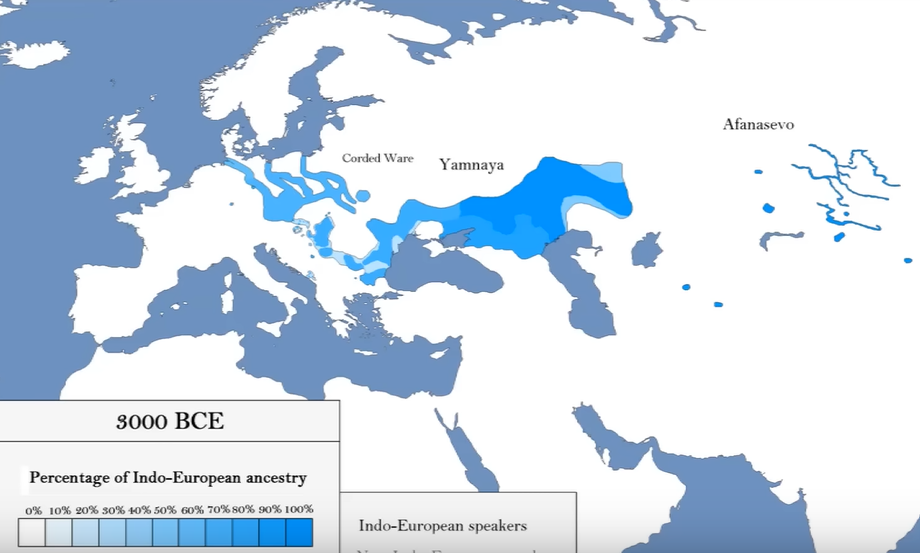
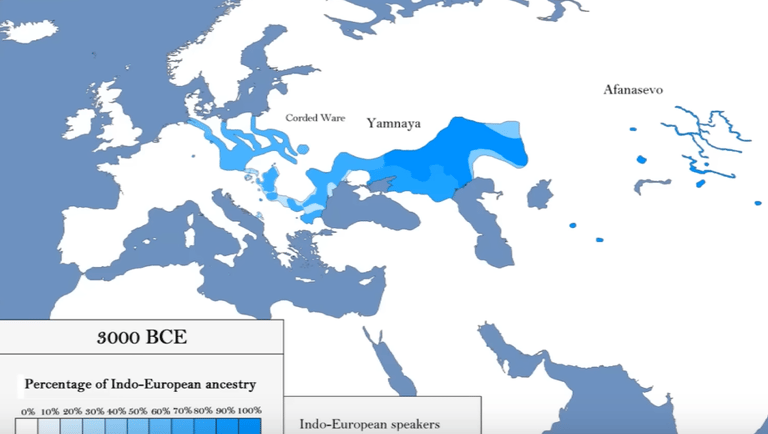
First stage of the Indo-European expansion. The Indo-Europeans moved first into the Balkans and then followed the Danube river northward to the northern rivers.
From an excellent animation of existing data: https://www.youtube.com/watch?v=fNv3R1xS6so&t=46s
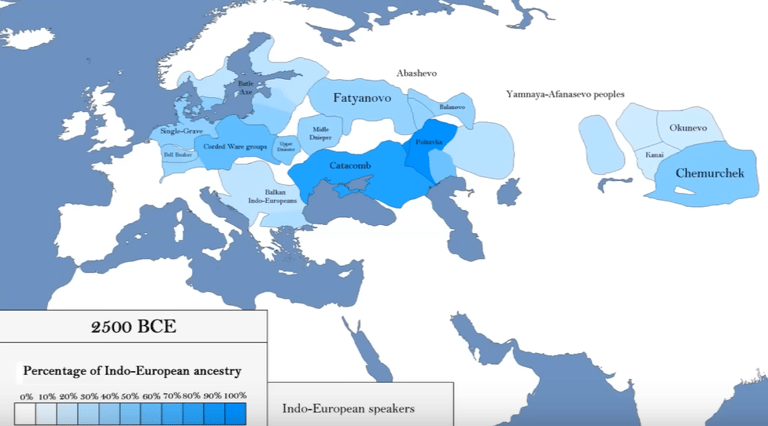

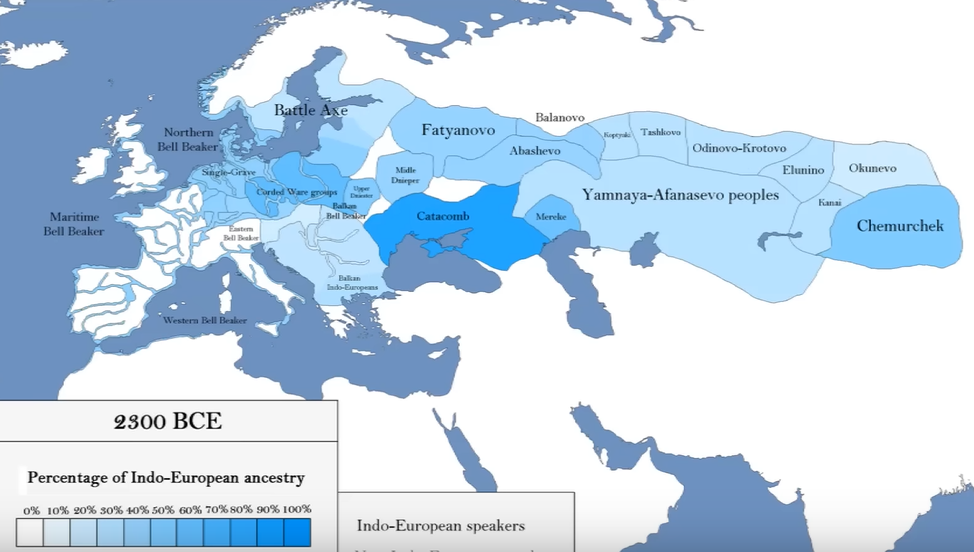
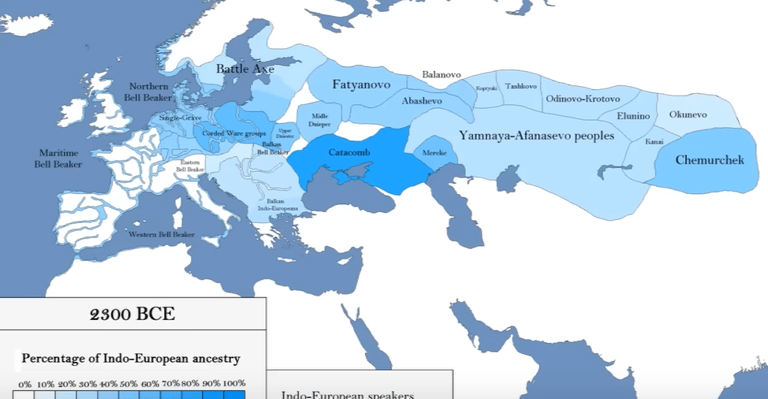
(October 31, 2023) From an excellent animation of existing data: https://www.youtube.com/watch?v=fNv3R1xS6so&t=46s
Notice how they conquered the river valleys first.
From an excellent animation of existing data: https://www.youtube.com/watch?v=fNv3R1xS6so&t=46s
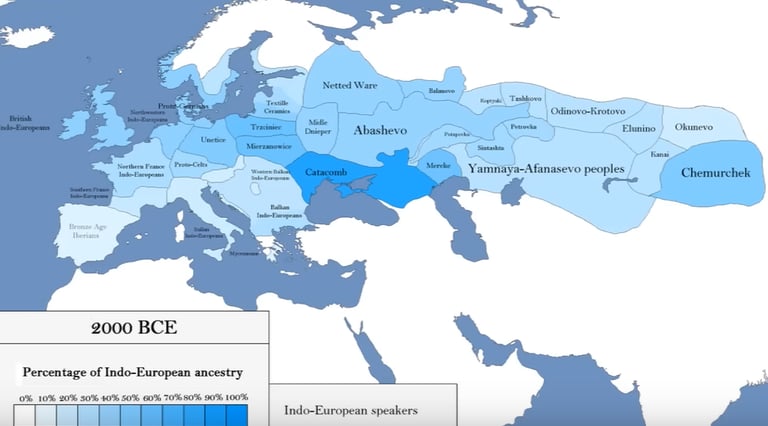


(October 31, 2023) From an excellent animation of existing data: https://www.youtube.com/watch?v=fNv3R1xS6so&t=46s
Based on word similarity studies of modern languages, Europe has two word sources, one Akkadian from northern Mesopotamia and one Indo-European from the steppes. This map shows the dates of the Akkadian expansion but labels it incorrectly. Modern European languages are a mix and remix of Indo-European and Akkadian.
References
P. Heggarty, and all (Science, 28 July 2023) Language trees with sampled ancestors support a hybrid model for the origin of Indo-European languages. Online at:
https://dx.doi.org/10.1126/science.abg0818
Press Release from the the Max Plank Institute: New insights into the origin of the Indo-European languages. Online at:
https://www.mpg.de/20666229/0725-evan-origin-of-the-indo-european-languages-150495-x
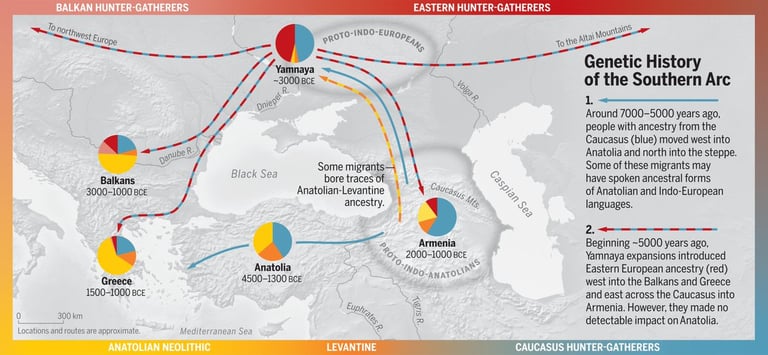
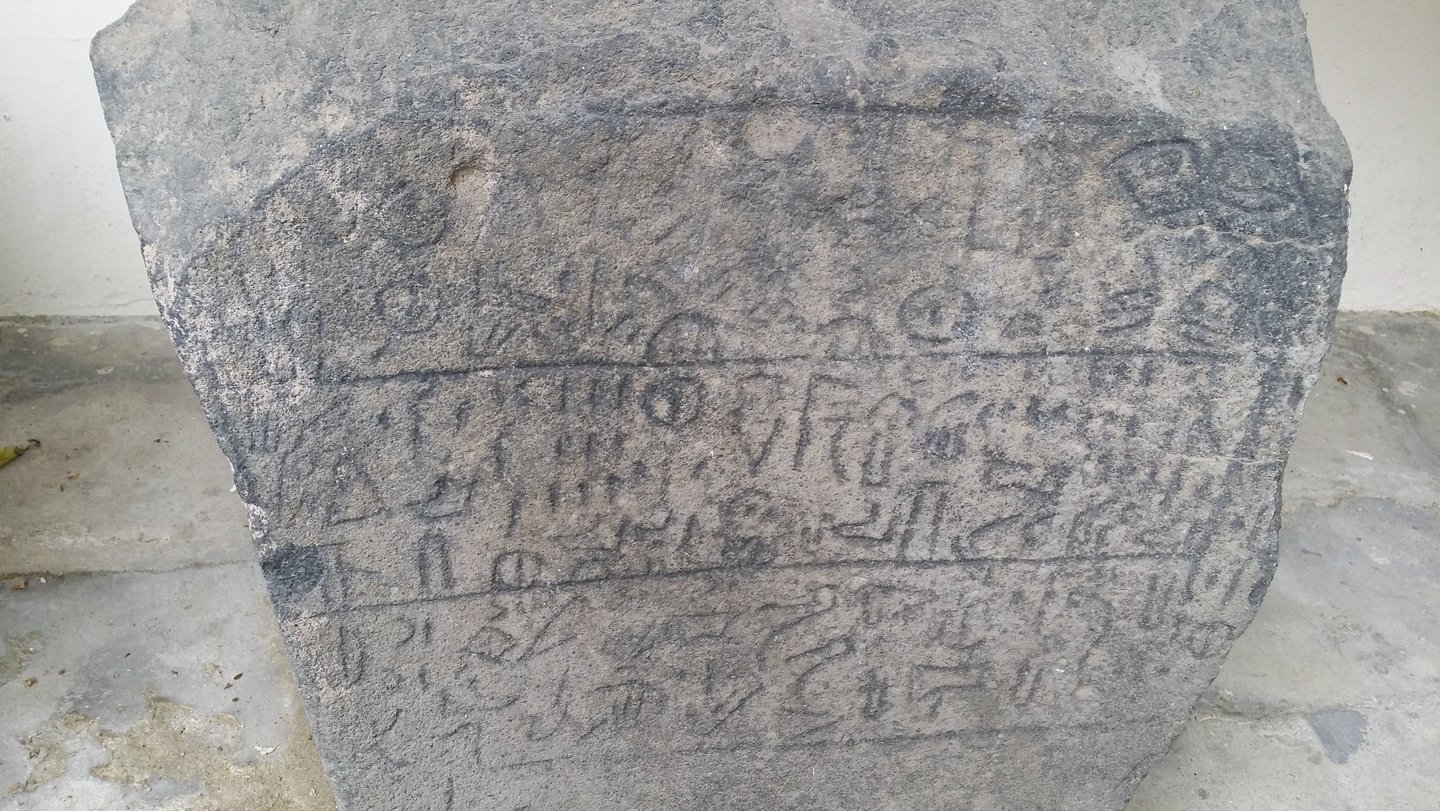

(January 25, 2026) But a third group of people (proto-Indo-Anatolians) out of the central Anatolian steppes also seems to have entered the mix who contributed greatly to Greek culture and may have been responsible for the as yet undeciphered Luwian language. Their genetics is shown in yellow.
Image from Iosif Lazaridis. Online at: https://twitter.com/iosif_lazaridis/status/1562867952692899840/photo/1
An example of the undeciphered Luwian hieroglyphics on a stone now at the Istanbul Archaeological Museum just sitting outside under a stairwell.
Photo by David Olmsted
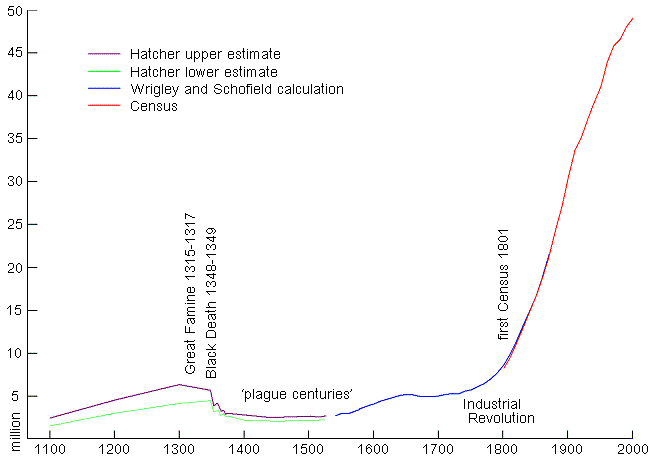
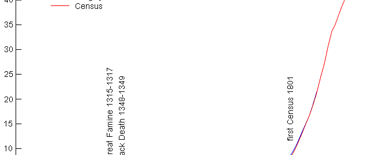
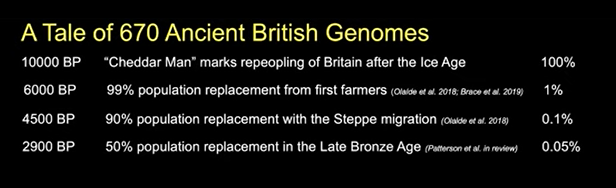
(January 25, 2026) This is a population chart of Britain. From Roman times up to 1000 CE, the British population remained steady at 1.5 million. Prior to that time we have to rely on indirect evidence. A new important line of evidence is genetic data from burials.
Chart by Brian Williams in 1996 as part of ‘The Cycles of Plague’, dissertation for a BA (Hons) degree at the University of Hull, England.. Online at: https://urbanrim.org.uk/population.htm
Chart showing population genetic percentages in Britain. From David Reich: "Origins of Humans and Culture." Upon first seeing this data most think this is evidence for repeated genocides as new people moved in but this cannot be the case except for the last example. The archaeological record does not show any kind of significant breaks from the past but only minor changes (see Booth and all 2021). Additionally, The Druid Akkadian language continued to be spoken and eventually written down on local runestones indicating that Druid culture was not extinguished.
Instead what happened was population ballooning. The new population simply overwhelmed the old one due to more intensive use of the local resources. So working backward and using the chart multiplying factor:
900 BCE: Some sort of invasion from the continent replaced half the existing population. No net population change. Population 1.5 million
2500 BCE: Indo-European invasion increased population from 150,000 to 1.5 million due to better farming techniques such as crop rotation with the animals pasturing in a field for a year (a factor of 10).
4000 BCE: Neolithic farmers settled the marshes and farm any flat lands with slash and burn agriculture increasing population from 1,500 to 150,000 (a factor of 100). Archaeologists typically think that Paleolithic Britain only had a few thousand hunter gathers at the time because the ice sheets had only just retreated. Consequently, this number correlates well with their best estimates.
References
Booth TJ, Brück J, Brace S, Barnes I. (2021) Tales from the Supplementary Information: Ancestry Change in Chalcolithic–Early Bronze Age Britain Was Gradual with Varied Kinship Organization. Cambridge Archaeological Journal. 31(3):379-400. https://doi:10.1017/S0959774321000019
"Origins of Humans and Culture," A year 2022 Youtube video interviewing David Reich, one of the leading historical geneticists. Online at: https://www.youtube.com/watch?v=rXsNKNZtdM0
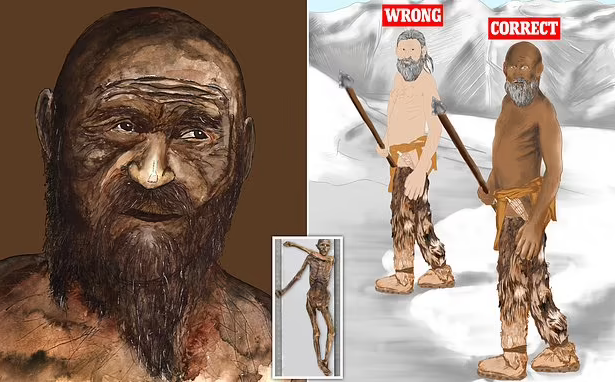
(May 27, 2024) Ötzi was found murdered in 1991 on the Southern slopes of the eastern Italian (Ötztal) Alps. He is the world's oldest glacier mummy. Radiocarbon dating and stable isotope analysis date him to between 3350–3120 BCE which is before the arrival of the Indo-Europeans to that area. Here is a quote from the Max Plank Institute Press Release dated August 16, 2023:
Ötzi's genome was decoded for the first time more than ten years ago. This was also the first time the genome of a mummy had been sequenced. The results provided important insights into the genetic makeup of prehistoric Europeans. Advances in sequencing technology have now enabled a research team from the Max Planck Institute for Evolutionary Anthropology and Eurac Research to reconstruct Ötzi’s genome more accurately. The results of this recent analysis refine the Iceman’s genetic picture: compared to other contemporary Europeans, Ötzi’s genome has an unusually high proportion of genes in common with those of early farmers from Anatolia. And, contrary to previous findings, at the time of his death, Ötzi had advanced hair loss and may have even been bald. Furthermore, his skin was darker than previously thought. Ötzi’s genes also show a predisposition to diabetes and obesity.
This darker skin indicates he also had some hunter-gatherer ancestry. This familial tradition helps explain why he became a trader or hunter instead of a farmer and was found in the Alps. Strong evolutionary pressure exists for skin color to match the needed amount of vitamin D production by sunlight for an effective immune system. To little vitamin D and the body is more susceptible to infection. Too much sunlight leads to skin cancer. During winter in the north all people were vitamin D deficient but they also tended to be isolated from each other. Northern hunter gatherers were darker than farmers probably because they wore less clothes in the summer due to not having any cloth.
References
Max Plank Institute Press Release dated August 16, 2023: https://www.mpg.de/20711365/0804-evan-dark-skin-bald-head-anatolian-ancestry-150495-x
Ke Wang, Kay Prüfer, Ben Krause-Kyora, Ainash Childebayeva, Verena J. Schuenemann, Valentina Coia, Frank Maixner, Albert Zink, Stephan Schiffels, Johannes Krause. (1923) High-coverage genome of the Tyrolean Iceman reveals unusually high Anatolian farmer ancestry. Cell Genomics, 2023; 100377 DOI: 10.1016/j.xgen.2023.100377
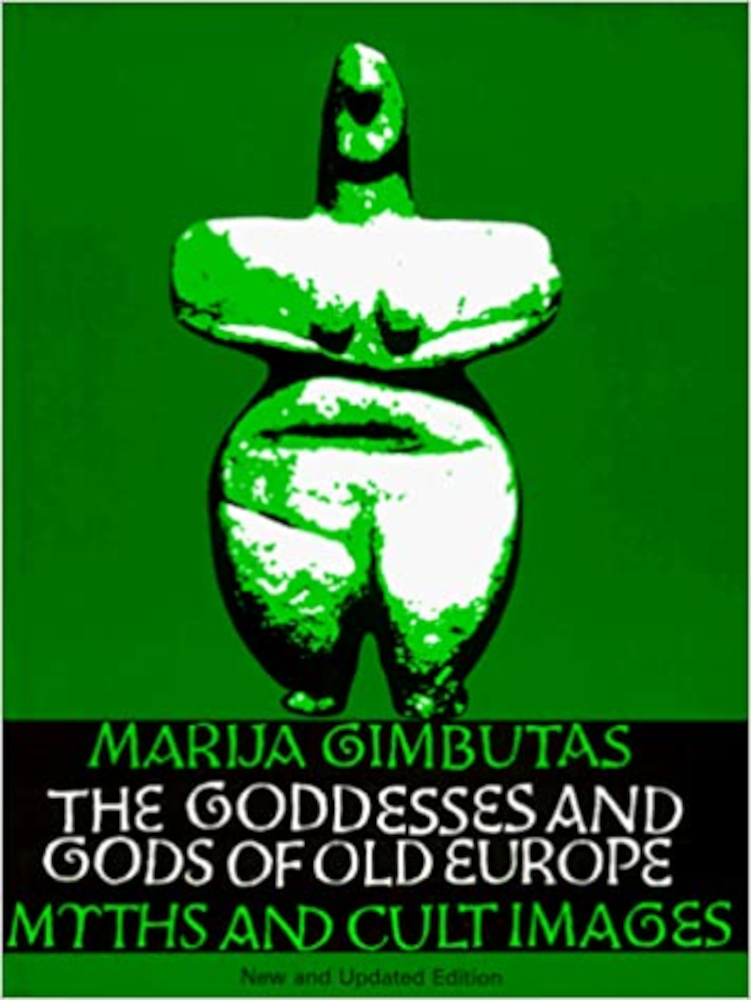
(Feb. 6, 2023) Before Ancient Druid Civilization theory of European cultural origins there was the Goddess Theory put out by Marija Gimbutas (1921-1994). She was the first to realize that the archaeological evidence pointed to a dynamic European civilization existing prior to the Indo-European invasion. She was a pioneer but like most pioneers she got it wrong due to limited evidence and being culturally trapped within her own culture. She failed for these reasons:
This was before the European runic texts were translated so she was going in blind using only archaeological finds which can be interpreted many different ways.
She was mentally trapped and viewed deities in the Biblical way as lord gods, that is, only as people and not also as powers.
She was monotheistic postulating a civilization centered around a single Goddess instead of God like today.
She was caught up in the feminist movement of the era so she simply ignored any evidence contrary to her Goddess superiority concept. In her last book in which she presented her views (“The Language of the Goddess from 1989) she even turned the masculine icon of the bull into a feminine “regeneration” icon (page 188).
In Gimbutas’ last book "The Civilization of the Goddess," in which she synthesizes the theses of her previous books ("Goddesses and Gods of Old Europe" 1974/1982 and "The Language of the Goddess" 1989/1991), she wrote these passages which illustrate her bias:
“The primordial deity for our Paleolithic and Neolithic ancestors was female, reflecting the sovereignty of motherhood. In fact, there are no images that have been found of a Father God throughout the prehistoric record. Paleolithic and Neolithic symbols and images cluster around a self-generating Goddess and her basic functions as Giver-of-Life, Wielder-of-Death, and as Regeneratrix.”
“The multiple categories, functions, and symbols used by prehistoric peoples to express the Great Mystery are all aspects of the unbroken unity of one deity, a Goddess who is ultimately Nature herself.”
© 2022-2026. By David D. Olmsted. All pages licensed under a Creative Commons Attribution-NonCommercial-ShareAlike 4.0 International Copyright. https://creativecommons.org/licenses/by-nc-sa/4.0/